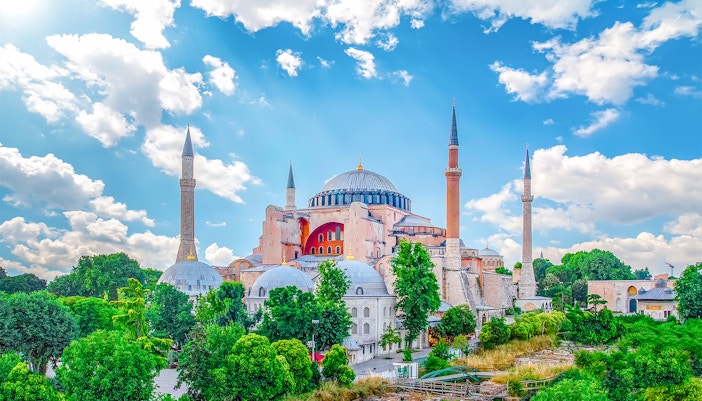
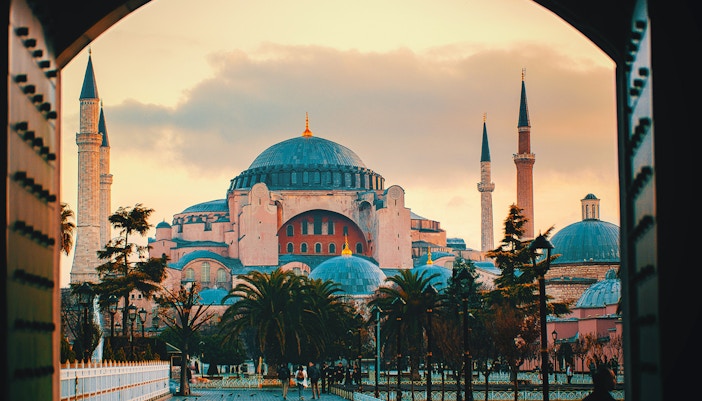
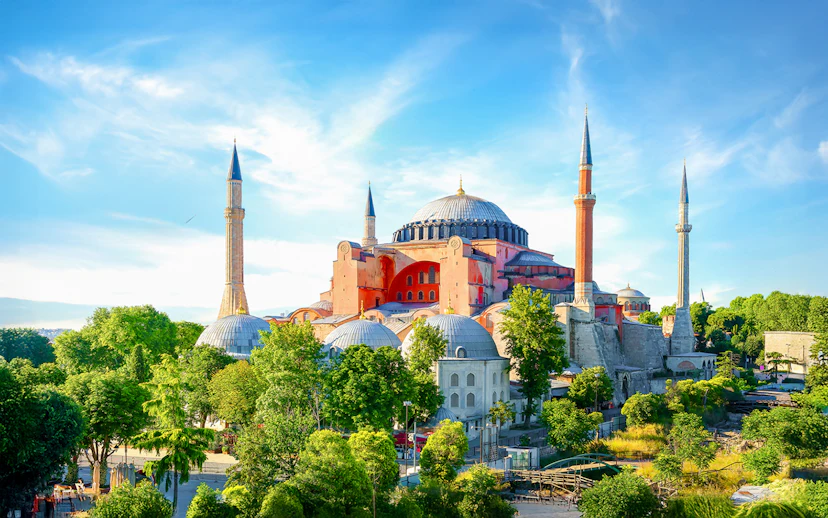
Hagia Sophia is Istanbul's most visited monument: a 1,500-year-old structure that has served as a Byzantine cathedral, an Ottoman mosque, a museum, and an active mosque again since 2020. Since 2024, tourists enter through a separate northeast entrance into the upper galleries only, the ground floor reserved for worshippers. Most visits take 45 to 90 minutes.
If you're visiting on a Friday, the mosque closes at noon and doesn't reopen to tourists until approximately 2:30pm. Arrive early enough to complete your visit by 11:45am, or plan to arrive after 3pm. The 12pm to 2:30pm window also coincides with the area's busiest restaurant period, so it's a practical time to eat nearby.
People near the south (Sultanahmet Square) entrance sometimes approach tourists offering guided tours or queue-bypass services. Since all tourists must enter via the northeast entrance and purchase tickets there or online, anyone directing you elsewhere is not affiliated with the official system. An invalid or overpriced ticket means rejoining the standard queue with no recourse
| Ticket type | What's included | Best for | Price |
|---|---|---|---|
Hagia Sophia Skip-the-Line | Upper gallery entry + multilingual audio guide (23 languages) | Visiting between April and October when ticket office queues run 30 to 60 minutes and you want to explore at your own pace | From €30 |
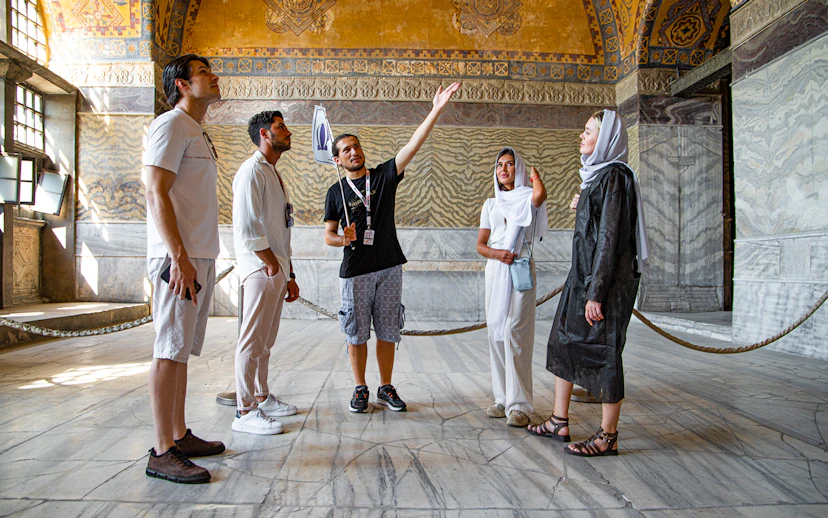
Hagia Sophia Guided Tour | Skip-the-line entry + licensed English-speaking guide | Visiting with limited context on Byzantine or Ottoman history, since the upper gallery has minimal signage and the 1,500-year layered story is difficult to piece together from the space alone | From €38 |
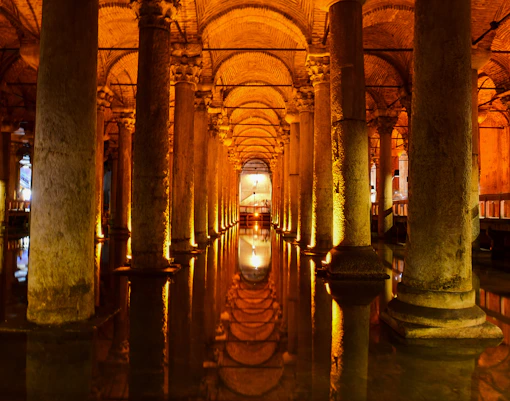
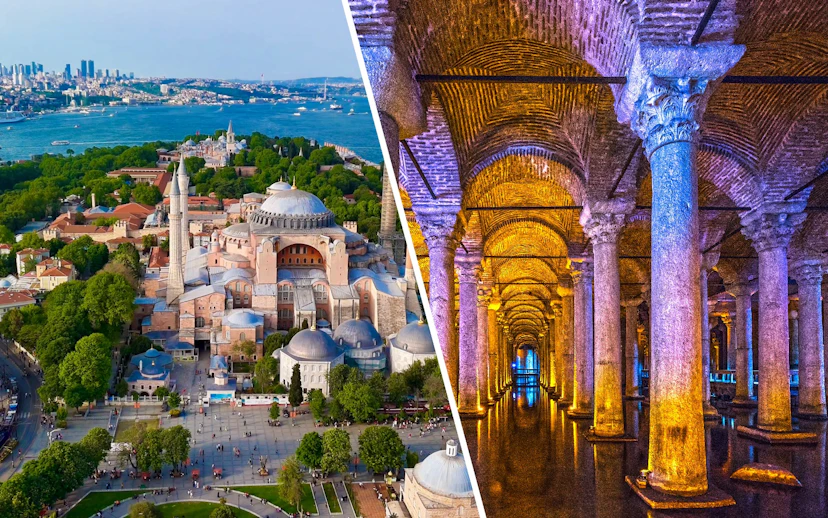
Combo: Hagia Sophia + Basilica Cistern | Skip-the-line entry to both sites + multilingual audio guide | Combining both 6th-century Byzantine landmarks in a single morning before the Cistern's midday crowds build, saving separate queuing at each | From €92 |

Hagia Sophia's tourist route runs through the upper galleries on the second floor, accessed via a ramp at the end of the narthex after entry. The full gallery loop takes 45 to 90 minutes. All visitors follow the same route, which can feel crowded during peak hours, so arriving early gives you more time to linger at individual points.
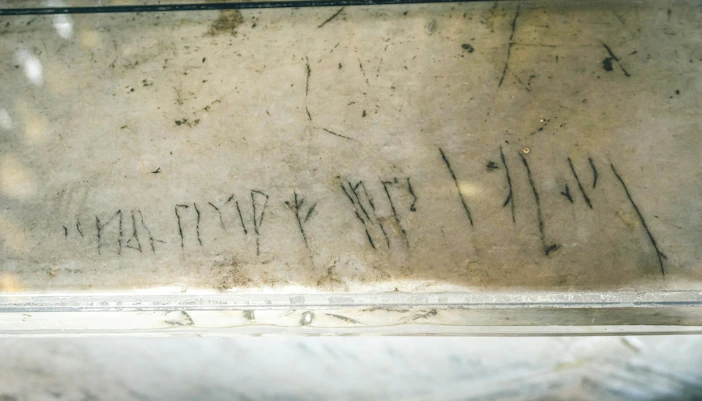
The Viking inscription in the south balustrade, which most visitors walk past; and the Deesis Mosaic in the southwest corner, where the low lighting means it's frequently overlooked by people moving quickly through. Both take under five minutes to find if you know where to look.
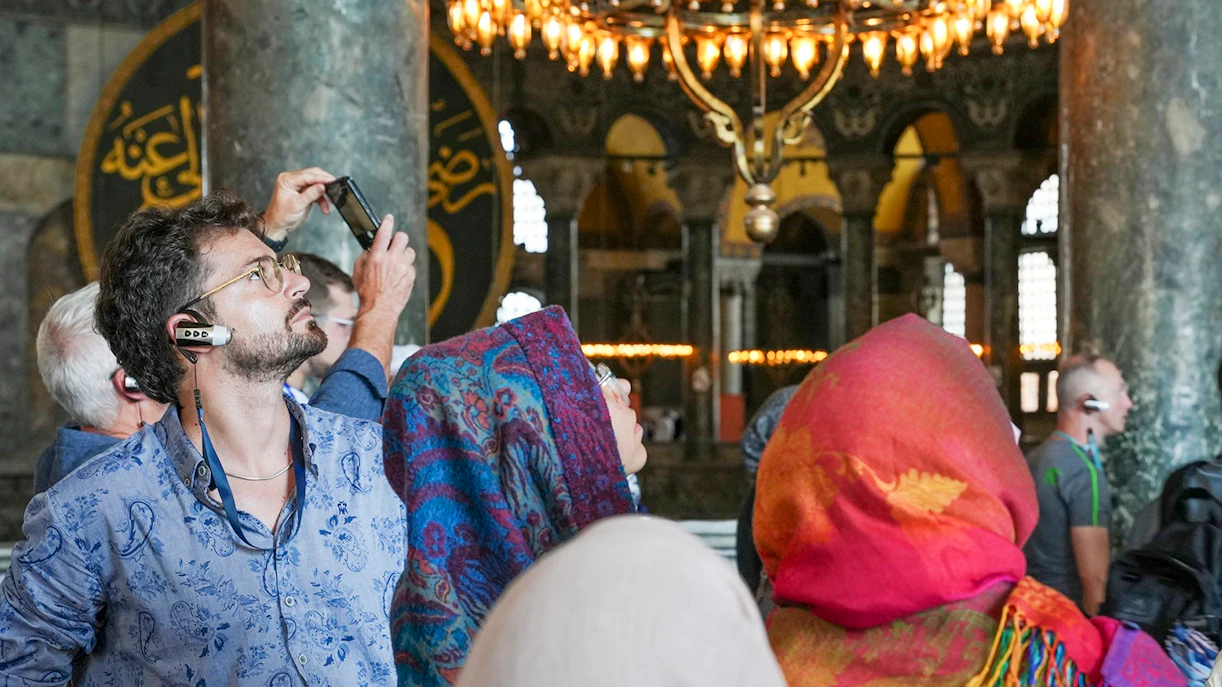
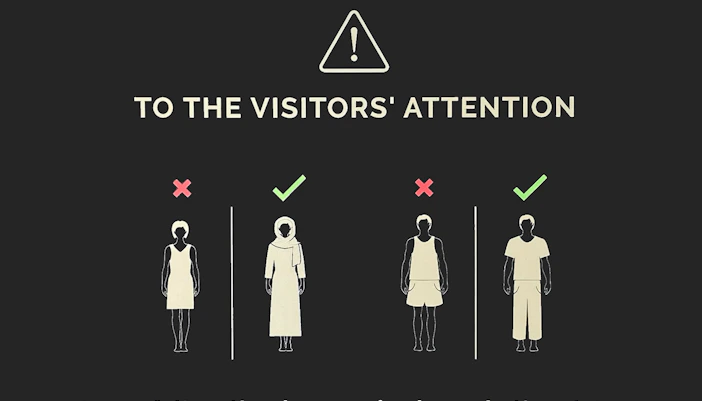
Shorts, sleeveless tops, and uncovered hair (women) are the most common reasons for delays on entry, even for visitors with skip-the-line tickets. A scarf tied around the waist covers exposed knees for both men and women. If you're unsure whether your clothing meets the requirement, err toward more coverage — guards apply the standard consistently.
Hagia Sophia is open throughout the year. The mosque remains closed for non-worshippers during prayer times.
It is best to visit the Hagia Sophia Mosque during the early hours of the morning to experience lesser crowds; avoid Friday afternoons, as it remains closed to non-worshippers during prayers. Try to visit during the winter months to experience pleasant weather.
You cannot enter the mosque during prayer time. Before planning your visit to Hagia Sophia, ensure that you do not visit the mosque during prayer times.
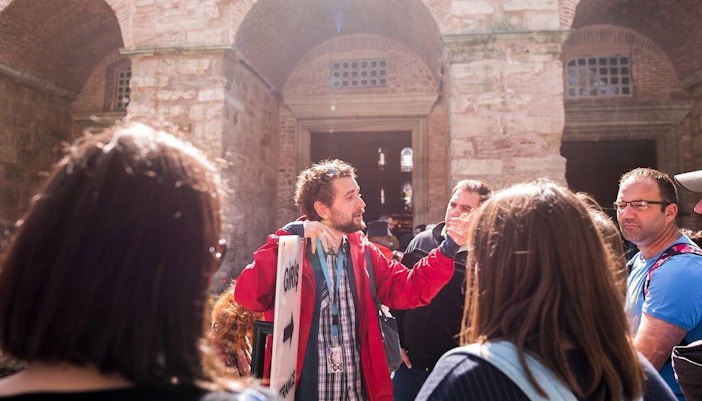
Yes, we recommend you book a Hagia Sophia guided tour. A guided tour will let you explore and learn about the history and culture of Hagia Sophia.
You can finish touring the Hagia Sophia in about 30 to 45 minutes, however, if you book a guided tour, it will take you around an hour. You can stay inside the monument for as long as you want. We recommend you book a guided tour to have a hassle-free and more informative experience.
Hagia Sophia is located in the European part of Sultanahmet square. Its address is Sultanahmet, Ayasofya Meydanı No:1, 34122 Fatih in İstanbul, Turkey.
The best way to reach Hagia Sophia is via tram or metro. If traveling by tram, take tram line T1 to Sultanahmet square and for the metro take the M2 line to Sultanahmet station.
There are nine entrances at the Hagia Sophia.
Yes, prams are allowed inside Hagia Sophia.
Yes, you can click pictures inside Hagia Sophia but avoid taking pictures of people who are praying.
Big luggage bags are not allowed inside Hagia Sophia. There is no cloakroom available for public use at the Hagia Sophia Mosque.
No strollers or wheelchairs are available at the Hagia Sophia.
Yes, you can explore every minaret and mosaic inside the Hagia Sophia in one visit. You can opt for a 1-hour guided tour to delve deeper into Hagia Sophia's history and have a more informative experience.
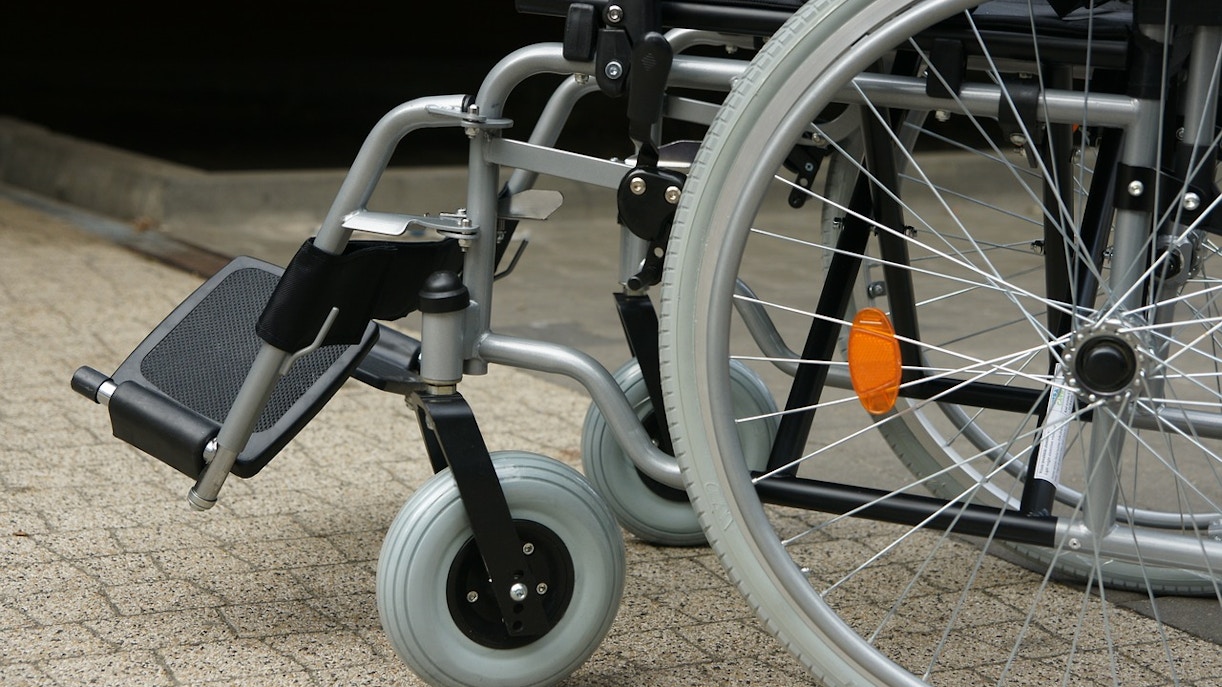
The ground floor is wheelchair-accessible. However, the upper floor of the Hagia Sophia is not very easy to navigate on wheelchairs due to all the steps and cobblestone pathways.
Yes, since the Hagia Sophia Mosque is a place of worship, all guests are expected to avoid shorts and sleeveless tops. Women must wear a headscarf to enter; you can find one free of charge near the entrance. You must also leave your shoes outside before entering.

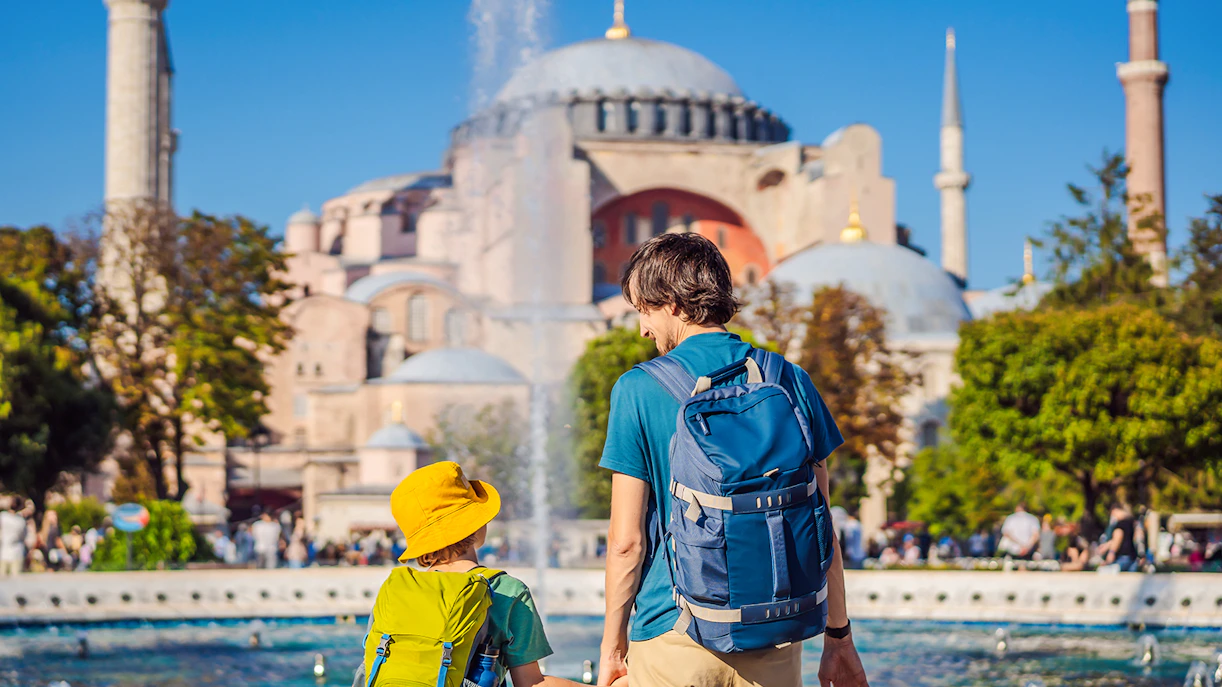
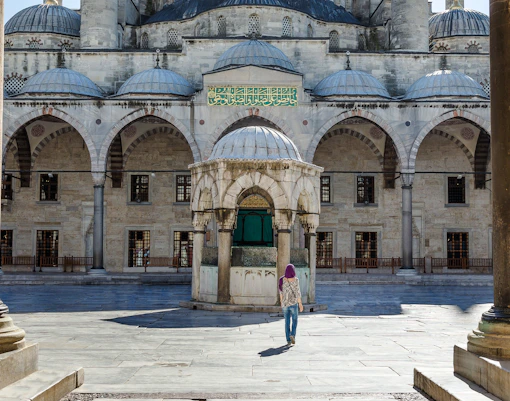
Hagia Sophia sits at the heart of the Sultanahmet district, Istanbul's Old City, directly adjacent to Topkapı Palace and facing the Blue Mosque across Sultanahmet Square. From the T1 tram's Sultanahmet stop, the northeast tourist entrance is a 7-minute walk.
Address: Sultan Ahmet, Ayasofya Meydanı No:1, 34122 Fatih, Istanbul, Turkey

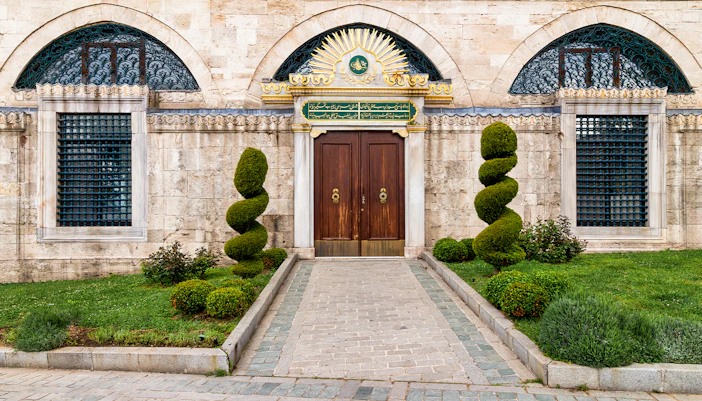
There are two entrances and getting this wrong costs 10 to 15 minutes.
If you can see the Blue Mosque directly in front of you when you arrive, you are at the south entrance. The tourist entrance is around the right side of the building.

When is it busiest: June through August, particularly between 10am and 3pm on weekends and after public holidays. April to May and September to October are the most manageable months, with shorter queues and cooler temperatures.
When should you actually go: Arriving at opening (8am in summer, 9am in winter) gives you the best light through the upper gallery windows for the mosaics and the quietest 90 minutes of the day. After 5pm is the second-best window: visitor numbers drop sharply and queues at the ticket office are consistently short.

Era: 537 AD | Diameter: 31 metres
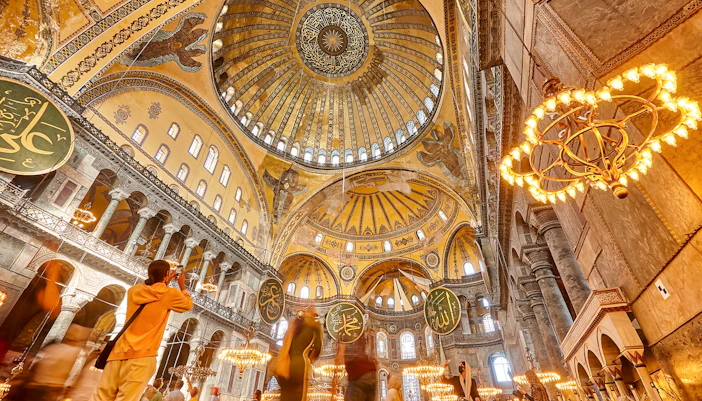
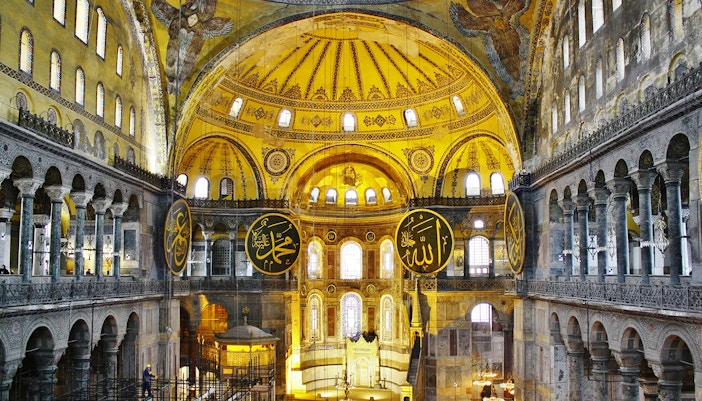
Spanning 31 metres, Hagia Sophia's central dome was once the largest in the world and remains a feat of Byzantine engineering. From the upper gallery, you're looking down at the nave and up at the dome's base simultaneously, which is where the scale hits hardest. The 40 windows at the base of the dome flood the interior with light at different angles depending on the time of day. The structure rising from the central floor area in 2026 is part of an ongoing structural restoration project. Most architectural details and mosaics remain accessible; the uninterrupted panoramic view of the open nave is currently partially affected.
Where to find it: Visible throughout the upper gallery from the balcony rails, best from the Empress Lodge.

Era: 13th century | Location: Southwest corner of upper gallery
The most celebrated Byzantine mosaic in the building, depicting Christ flanked by the Virgin Mary and John the Baptist. It dates from approximately the 13th century and is remarkable for its humanistic rendering of expression, a significant departure from the formal Byzantine style of earlier works. The mosaic was hidden under plaster for several centuries during the Ottoman period and revealed during restoration in the 1930s. Many visitors walk past the southwest corner without slowing down here.
Where to find it: Southwest corner of the upper gallery, on the left wall as you complete the main loop. The lighting is low, so allow your eyes to adjust.

Era: Byzantine | Location: Central upper gallery, south end
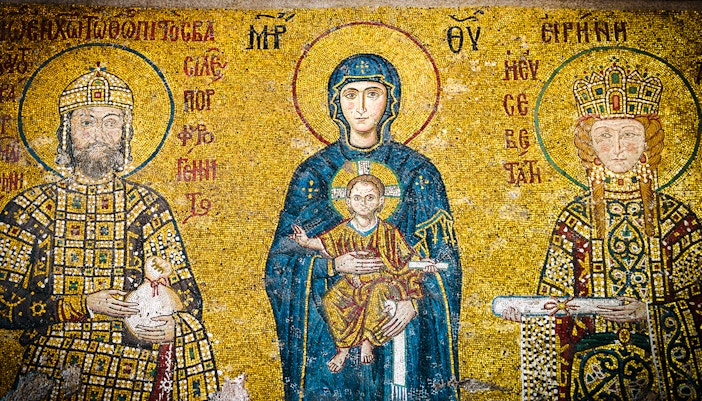
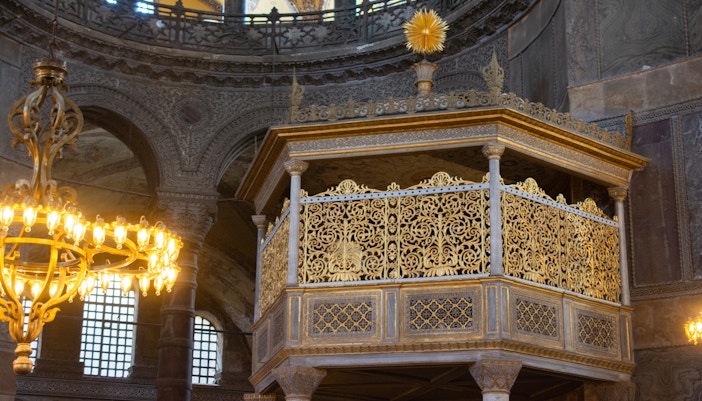
The prime viewpoint for the entire interior: from here you can take in the dome, the nave, the Ottoman calligraphy medallions below, and the Omphalion (coronation spot) on the ground floor. This is also where the most significant imperial mosaics in the upper gallery are located, including the Comnenian mosaic depicting Emperor John II and Empress Eirene with the Virgin Mary. Most visitors spend 10 to 15 minutes here.
Where to find it: Central position on the south side of the upper gallery, directly above the Sultanahmet Square entrance.

Era: 6th century | Location: Main entry narthex
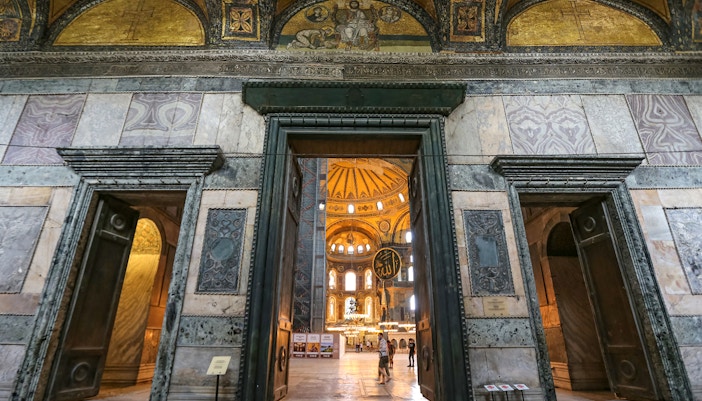
The largest and most ornate of Hagia Sophia's doors, dating to the original 6th-century construction. It was reserved exclusively for the Byzantine emperor, who would enter through this door directly from the palace complex. The mosaic above the door (visible on the way in) depicts a Byzantine emperor prostrating before Christ. At 7 metres high, it remains one of the largest surviving Byzantine doors in existence.
Where to find it: At the transition between the outer and inner narthex, directly on the main axis. You pass through it on entry.

Era: 9th to 11th century | Location: Upper gallery south balustrade
One of the more unexpected details in the building: a runic inscription carved into a marble balustrade by a Varangian Guard, the Viking mercenaries who served the Byzantine emperors. The most complete reads "Halvdan carved these runes," though portions have been worn down over centuries. It is easy to miss entirely without knowing where to look.
Where to find it: Along the south balustrade of the upper gallery, near the Empress Lodge area. Look for the carved marks on the inner surface of the low marble wall.

Era: Byzantine | Location: Ground floor, visible from upper gallery
The circular marble inlay on the ground floor from which Roman and Byzantine emperors were crowned. From the upper gallery balcony you can see the Omphalion directly below. The name translates literally as "navel," a reference to the acoustics of the spot, from which the voice carries to every corner of the building.
Where to find it: Visible from the south balcony of the upper gallery, directly below the main dome.


Hagia Sophia works well for children old enough to appreciate scale and visual detail, typically from around 7 to 8 years upward. The dome's size is immediately legible even to children, and the Viking inscription is a reliable hit regardless of age.


Hagia Sophia is an active mosque and enforces its dress code at the tourist entrance with no exceptions.
Required:
Good to know: Free scarves and wrap coverings are available at the entrance near the ticket area, but during busy periods (June to August, weekends), there can be a short queue for these. Bringing your own scarf takes the uncertainty out of it.

Distance: 150m, 2-minute walk.
Why people combine them: Both are 6th-century Byzantine structures built under Emperor Justinian I, making them the most natural thematic pairing in Sultanahmet. The Cistern is also Hagia Sophia's quietest major site, most manageable before 11am. The combo ticket covers both and saves separate queuing.

Distance: 250m, 3-minute walk across Sultanahmet Square.
Why people combine them: The Blue Mosque is free to enter and sits directly opposite Hagia Sophia. Most visitors cover both in the same morning. Note that the Blue Mosque also has a dress code and brief prayer-time closures, so coordinating times matters.

Distance: 260m, 4-minute walk.
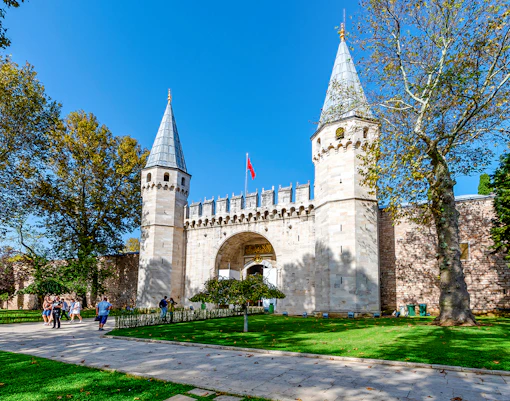
Why people combine them: Istanbul's largest Ottoman palace shares the same Sarayburnu headland as Hagia Sophia. The Istanbul Super Combo covers both with one booking and skips the separate ticket queues at Topkapı. Allow at least 3 hours for Topkapı on top of Hagia Sophia.

Distance: 3 km, approximately 15 minutes by T1 tram.
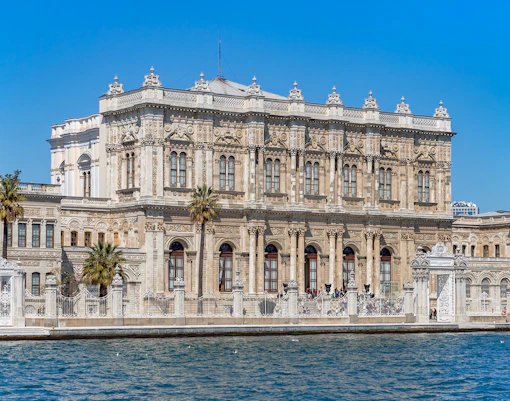
Worth knowing: Istanbul's 19th-century Ottoman palace contrasts Hagia Sophia's Byzantine origins with Baroque and Rococo interiors. Best as a separate half-day rather than a same-day addition after Hagia Sophia.

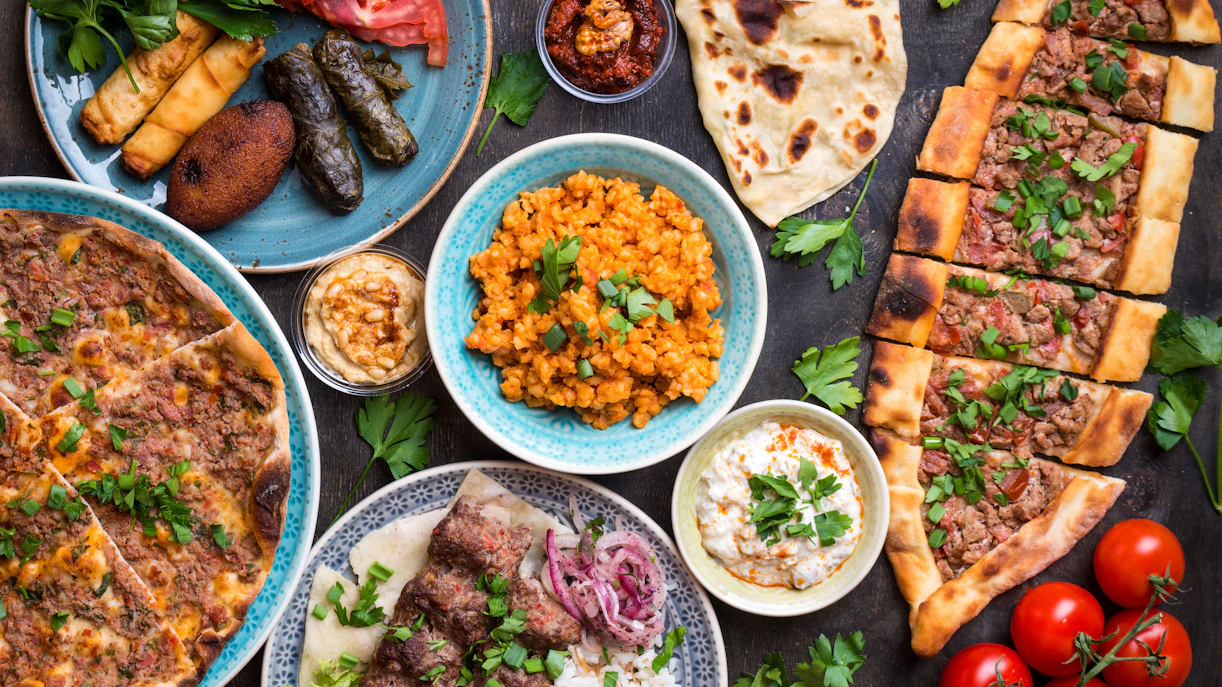
The restaurant strip immediately around Hagia Sophia is tourist-facing, with pricing that reflects the location. The options below are within 500m and consistently recommended:

The Sultanahmet neighbourhood puts you within a 5 to 10-minute walk of Hagia Sophia, Topkapı Palace, the Basilica Cistern, and the Blue Mosque, which makes it an efficient base for a short Istanbul trip focused on the Old City. However, the neighbourhood is quieter after dark and most of Istanbul's better restaurants and nightlife are in Beyoglu on the other side of the Golden Horn, about 15 minutes away by tram.
Price point: All tiers available, with a significant premium for location.
Luxury: Four Seasons Hotel Istanbul at Sultanahmet, Hagia Sofia Mansions Istanbul
Mid-range: Boutique Saint Sophia Hotel, Seven Hills Hotel, Ottoman Hotel Imperial
Budget: Zeynep Sultan Hotel, The Million Stone Hotel
Consider instead: Beyoglu/Taksim for stays of more than two nights, particularly if you want broader access to restaurants and nightlife. The T1 tram connects Taksim (via the F1 funicular at Kabataş) to Sultanahmet in about 20 minutes.


Breeze past the ticket lines at Hagia Sophia and explore with an audio guide for a stress-free visit.
Inclusions #
Skip-the-line entry to Hagia Sophia
Multilingual audio guide for Hagia Sophia
Guided tour of Hagia Sophia (as per option selected)
Expert English-speaking guide (as per option selected)
Entry to Hagia Sophia History & Experience Museum (as per option selected)
Audio guide for Hagia Sophia History & Experience Museum (as per option selected)
Skip-the-line entry to Basilica Cistern (as per option selected)
Guided tour of the Basilica Cistern (based on option selected)
Multilingual audio guide for Basilica Cistern (as per option selected)
Guided tour of the Blue Mosque with entry (as per option selected)
3-hour Bosphorus cruise (as per option selected)
4-course Turkish dinner (menu here) (as per option selected)
Live entertainment, including Turkish folk dance, Whirling Dervish shows, sword performances, & a DJ (as per option selected)
Unlimited soft drinks (as per option selected)
Exclusions #
Skip the security line
Hotel pickup and drop-off
Food and drinks
Gratuities/tips
Souvenir photos
Additional activities outside the main tour

Join an expert English-speaking guide to skip the lines and explore the architectural marvel of Hagia Sophia.
Inclusions #
Skip-the-line entry to Hagia Sophia
Guided tour of Hagia Sophia
Expert licensed English-speaking guide
Skip-the-line entry to Blue Mosque (as per option selected)
Guided tour of Blue Mosque (as per option selected)
Exclusions #
Hotel pickup and drop-off
Food and drinks
Gratuities/tips
Souvenir photos

Explore two of Istanbul’s most iconic landmarks with a single combo ticket and skip the crowds.
Inclusions #
Basilica Cistern
Skip-the-line entry to Basilica Cistern
Audio guide downloadable in English, German, French, Italian, Spanish, Portuguese, Japanese, Korean, Chinese, Russian, Romanian, Turkish
Option to explore with a live guide
Hagia Sophia
Skip-the-line entry to Hagia Sophia
Audio guide downloadable in English, German, French, Italian, Spanish, Portuguese, Japanese, Korean, Chinese, Russian, Romanian, Turkish
Exclusive access to the Upper Gallery visiting area
Option to explore with a live guide
Hagia Sophia
Basilica Cistern
Hagia Sophia
Basilica Cistern
Hagia Sophia
Basilica Cistern
Hagia Sophia