Hagia Sophia's history | Consecration, early years, and transformations

Dating back to 537 AD, Hagia Sophia in Istanbul is more than just a building, it is a storyteller. With its soaring central dome, glittering mosaics, and intricate stonework, this Byzantine masterpiece has lived many lives: first a church, then a mosque, later a museum, and now a mosque once more. Over 1,500 years, it has witnessed empires rise and fall and stands today as a striking symbol of Istanbul’s unique blend of Eastern and Western cultures.

Quick overview: Hagia Sophia's timeline
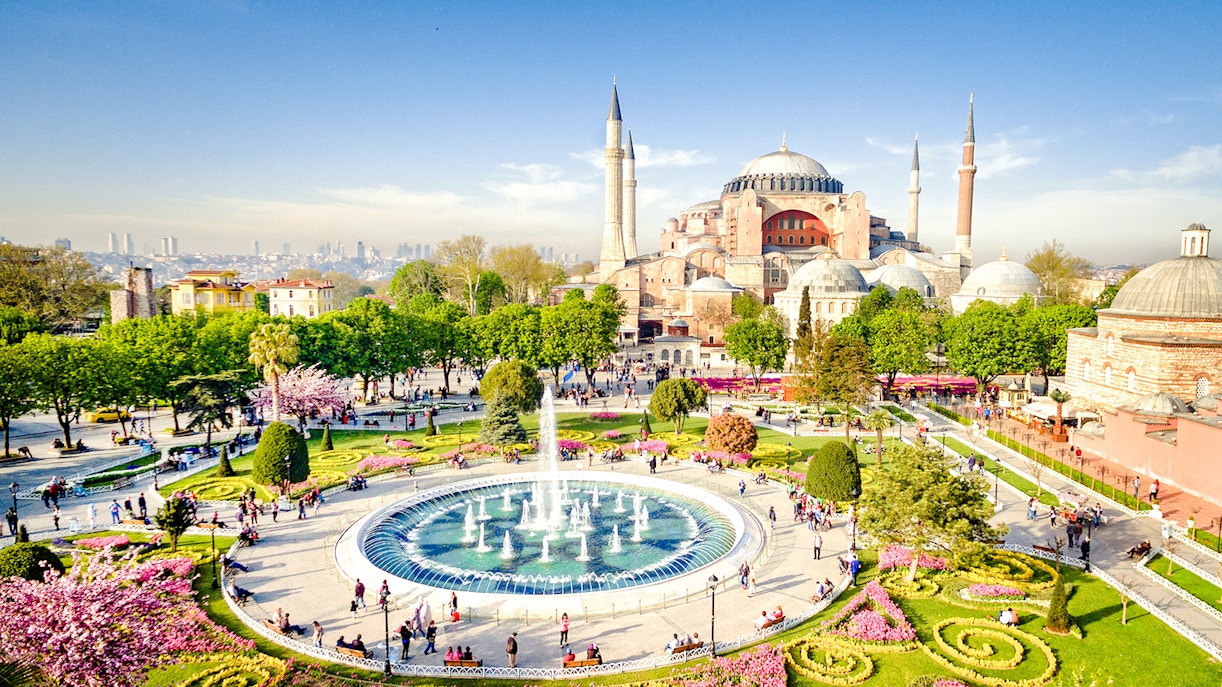
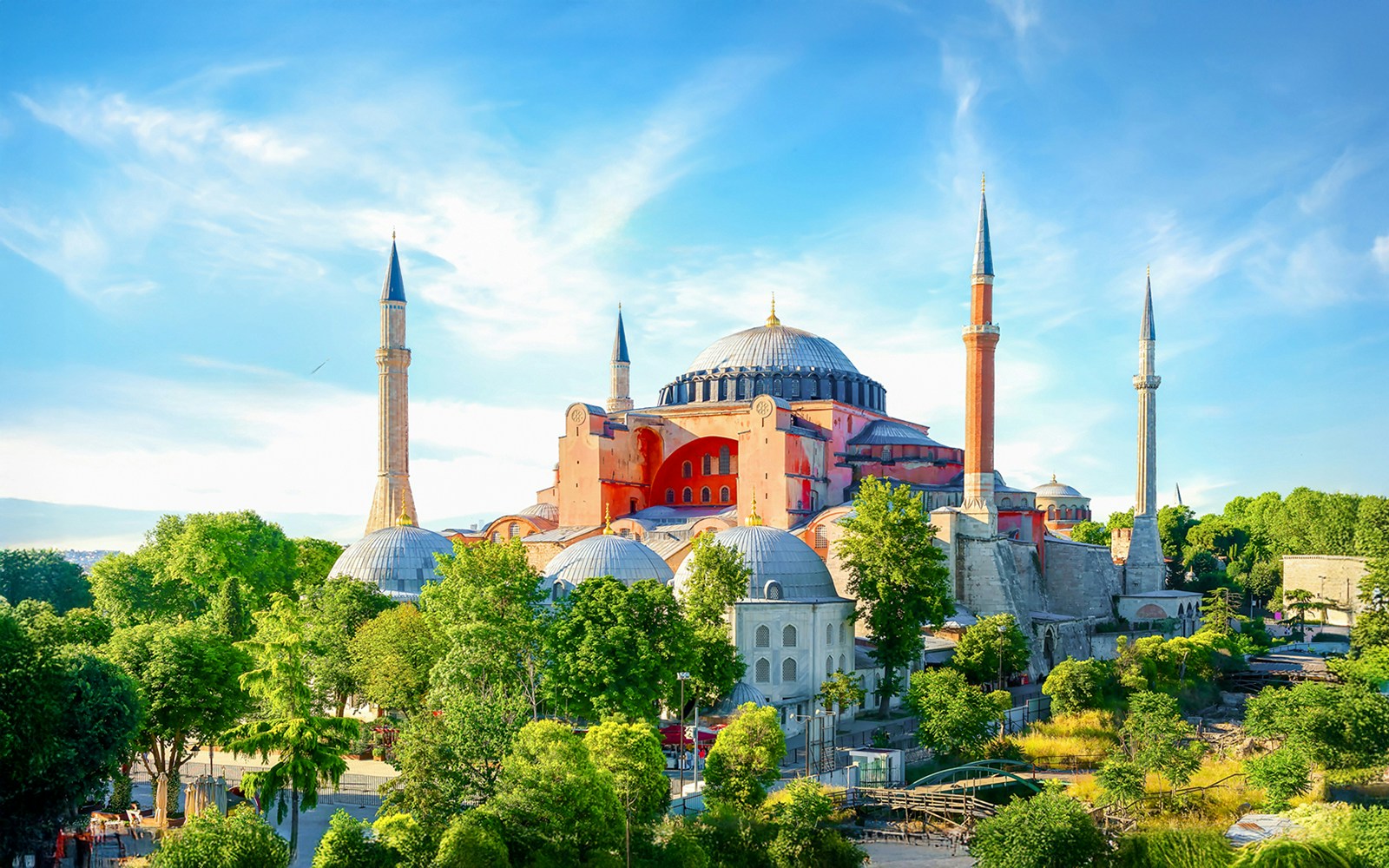
Aerial view of Hagia Sophia and surrounding gardens in Istanbul, Turkey.
  • 537 AD: The current Hagia Sophia is completed under Emperor Justinian I, marking a milestone in Byzantine architecture.
  • 2020 AD: Hagia Sophia is reconsecrated as a mosque, continuing its long history as both a religious and cultural landmark.
  • 537–1204 AD: The building serves as the main Eastern Orthodox cathedral of Constantinople.
  • 1204–1261 AD: Hagia Sophia is converted into a Roman Catholic cathedral during the Latin occupation of Constantinople.
  • 1453–1934 AD: After the Ottoman conquest, Hagia Sophia functions as a mosque throughout the Ottoman era and the early Republican period.
  • 1934 AD: The Turkish government, under Mustafa Kemal Atatürk, issues a decree to convert Hagia Sophia into a museum.
  • 1935–2020 AD: Hagia Sophia turns into a museum, with extensive restorations and preservation works carried out during this period.
About Hagia Sophia

Hagia Sophia history explained

Hagia Sophia Established

Hagia Sophia church established (537 AD)

An earlier church built in 360 AD during the reign of Constantius II once stood on this site but was rebuilt several times. The current Hagia Sophia was constructed under Emperor Justinian I after the previous basilica was destroyed in 532 AD, forming the structure that stands today.

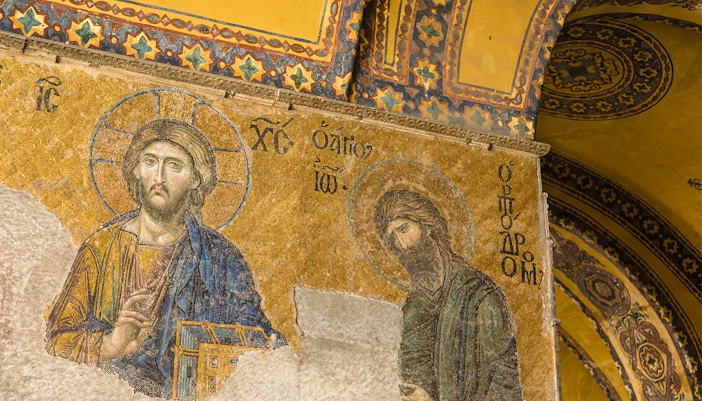
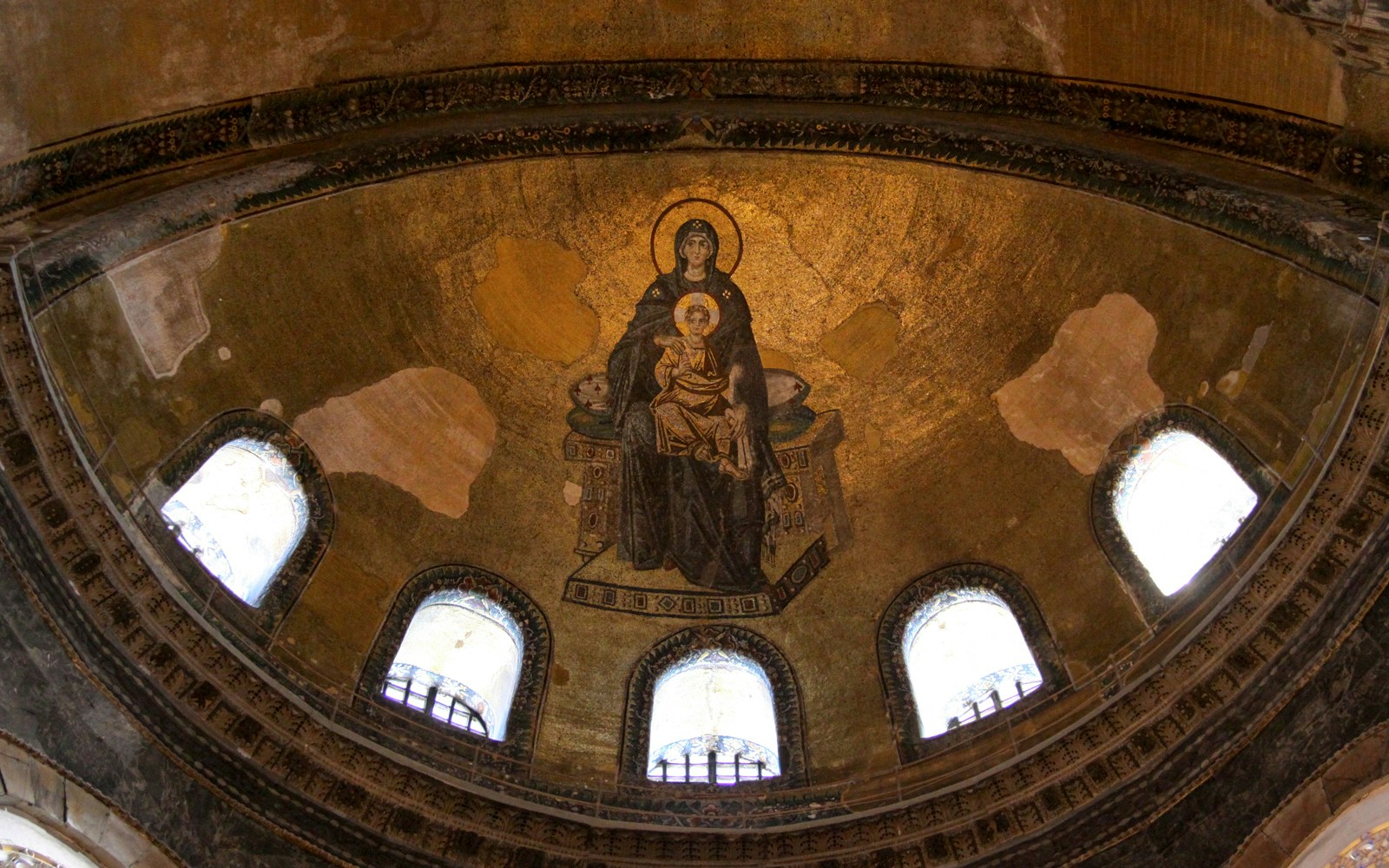
Mosaic depicting religious figures inside the Hagia Sophia Mosque, Istanbul.

Hagia Sophia as a church (537 AD to 1453)

During the 13th century, the Hagia Sophia functioned briefly as a Roman Catholic cathedral under Latin rule. It was caught in the middle of disputes between the Western Catholic and Eastern Orthodox Churches. Earthquakes also led to several periods of repair and restoration.

More about Hagia Sophia Church
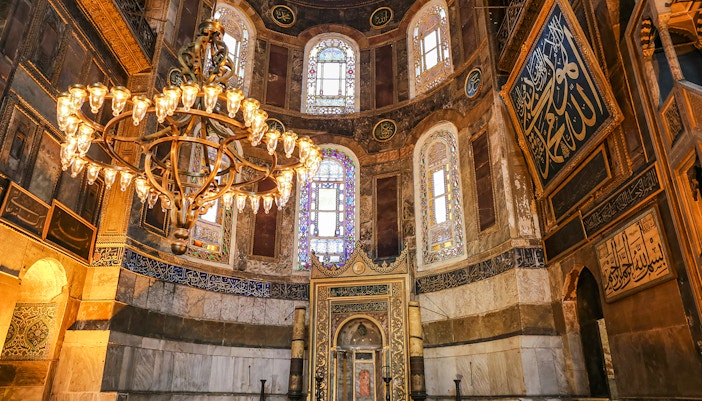
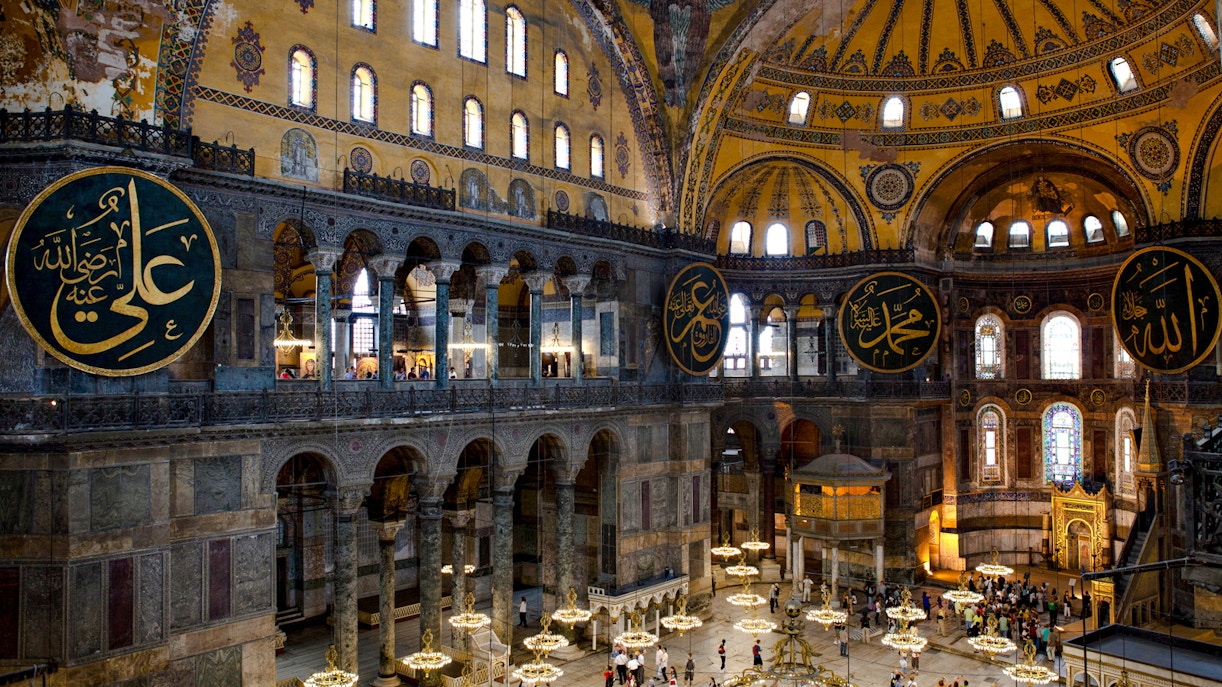
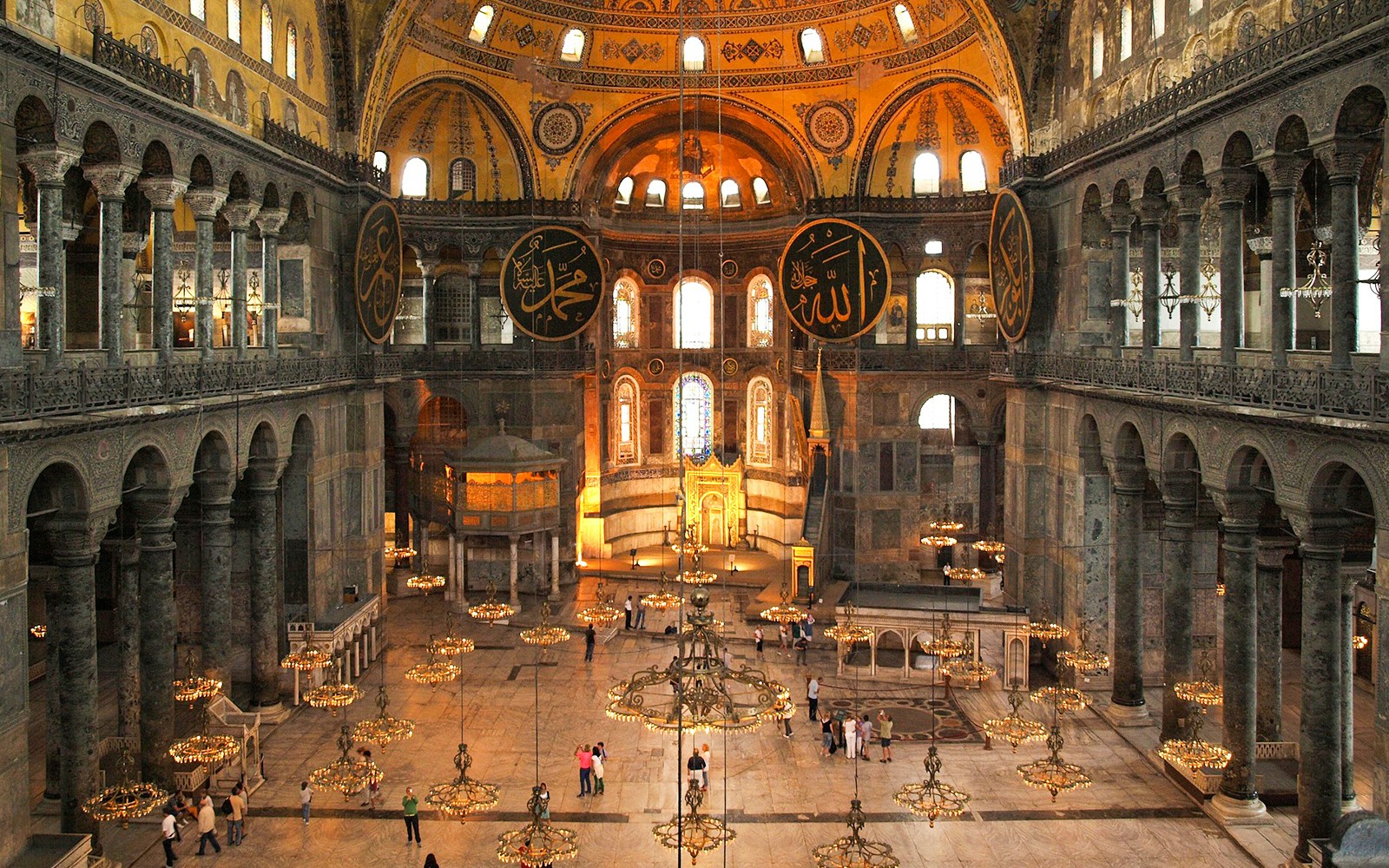
Interior view of Hagia Sophia in Istanbul, featuring ornate chandeliers and intricate stained glass windows.

Hagia Sophia as a mosque (1453 to 1922)

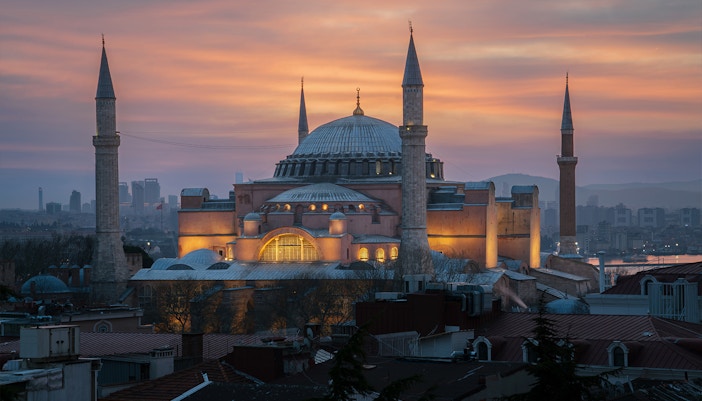
After the Ottoman conquest of Constantinople in 1453, the church was converted into the Hagia Sophia Mosque. Over nearly five centuries, additions such as minarets, a mihrab, a mimbar, a preacher's platform, and wooden balustrades reflected its new religious role.

More about Hagia Sophia Mosque
Hagia Sophia Grand Mosque at sunset, Istanbul skyline in the background.

Hagia Sophia declared to be a museum (1934)

In 1935, Ataturk, as the founder and President of the Republic of Turkey, opened Hagia Sophia as a museum. Extensive renovation efforts followed, uncovering mosaics, replacing carpets, and restoring decorative elements.

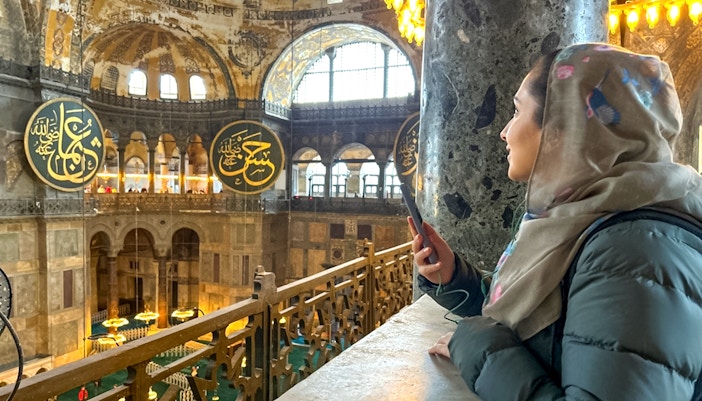
Visitor using audio guide inside Hagia Sophia, Istanbul.

Hagia Sophia as a museum (1935 to 2020)

As a museum, Hagia Sophia became one of the country’s most visited sites. Scholars and conservationists gained significant insights into its Byzantine and Ottoman past. In 1985, it became part of the UNESCO World Heritage Site known as the Historic Areas of Istanbul.

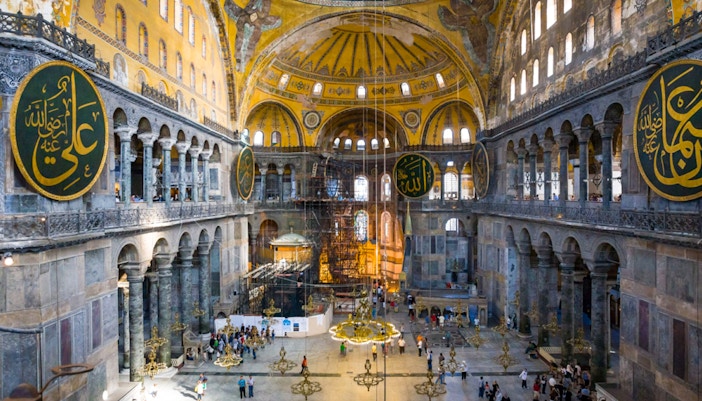
Interior of Hagia Sophia with visitors, showcasing ornate arches and large calligraphic medallions, Istanbul.

Hagia Sophia as a mosque (2020)

In 2020, its status changed once again and Hagia Sophia became a functioning mosque. Today, it remains an active place of worship while also standing as a reminder of Istanbul’s diverse cultural and religious history.

Construction of the Hagia Sophia

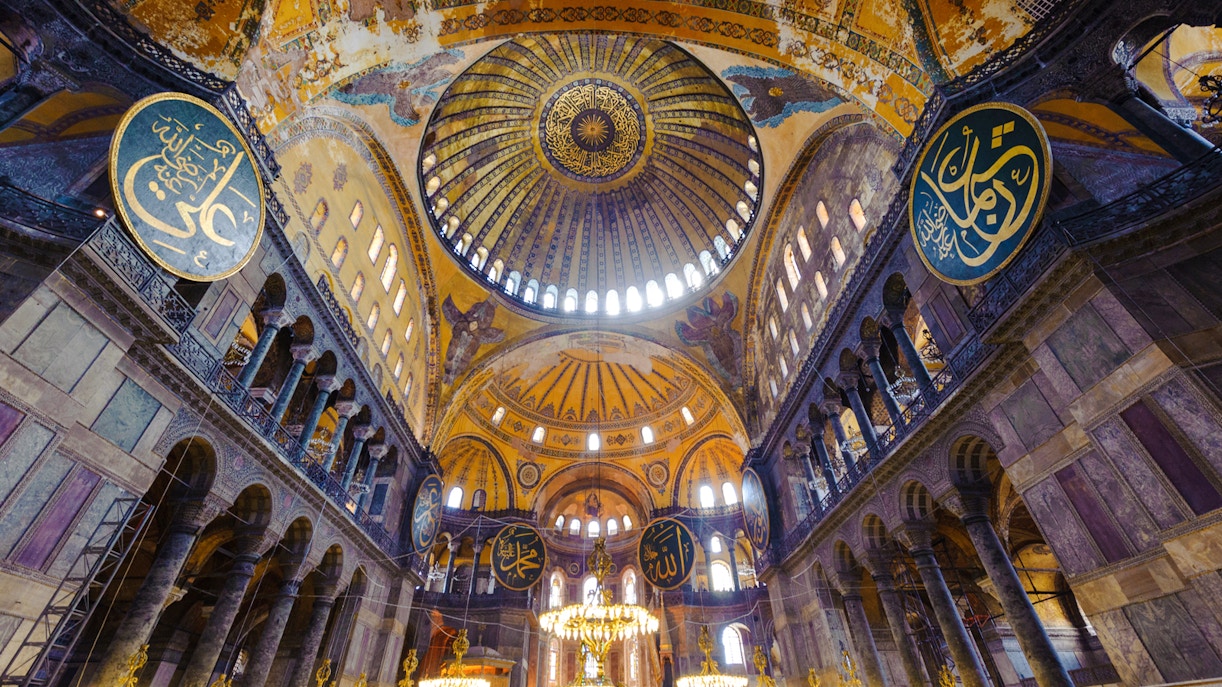
Hagia Sophia dome interior with intricate mosaics, Istanbul, on a historian-guided tour in Spanish.

Commissioned by Emperor Justinian I of the Byzantine Empire, the construction of the Hagia Sophia began in 532 AD and was completed in 537 AD. The structure was designed by two architects, Anthemius of Tralles and Isidore of Miletus.

The architects employed innovative techniques to create an open interior space with a large central dome that appeared to float above the structure. To support such a large dome, the builders developed a system of buttresses and piers, as well as a series of smaller domes and half-domes, to distribute the weight evenly and provide structural stability.

The exterior of the Hagia Sophia was adorned with intricate mosaics and marble columns, while the interior was embellished with marble panels, gold leaf, and colorful mosaics depicting religious scenes and figures. When it was consecrated in 537 AD, it was the largest cathedral in the world and remained so for nearly a thousand years.

More about Hagia Sophia's exterior

Architecture of Hagia Sophia

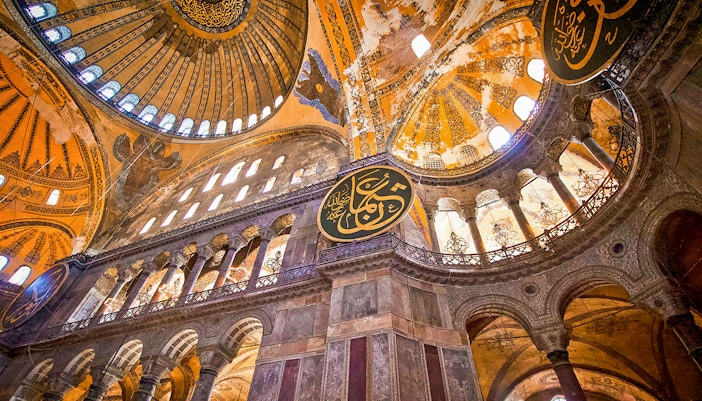
Hagia Sophia interior with ornate dome and Islamic calligraphy, Istanbul, Turkey.

Hagia Sophia's architecture is a unique blend of Eastern and Western styles, given its expansive history of 1500 years. The original cathedral was built by Emperor Justinian I in the 6th century and designed by Anthemius of Tralles and Isidorus of Miletus, two prominent architects of the time.

The most distinctive feature of Hagia Sophia's architecture is its massive dome, which spans 102 feet in diameter and rises to a height of over 180 feet. The dome was a technological marvel of its time, and its design allowed it to support the weight of the massive structure without the need for support columns.

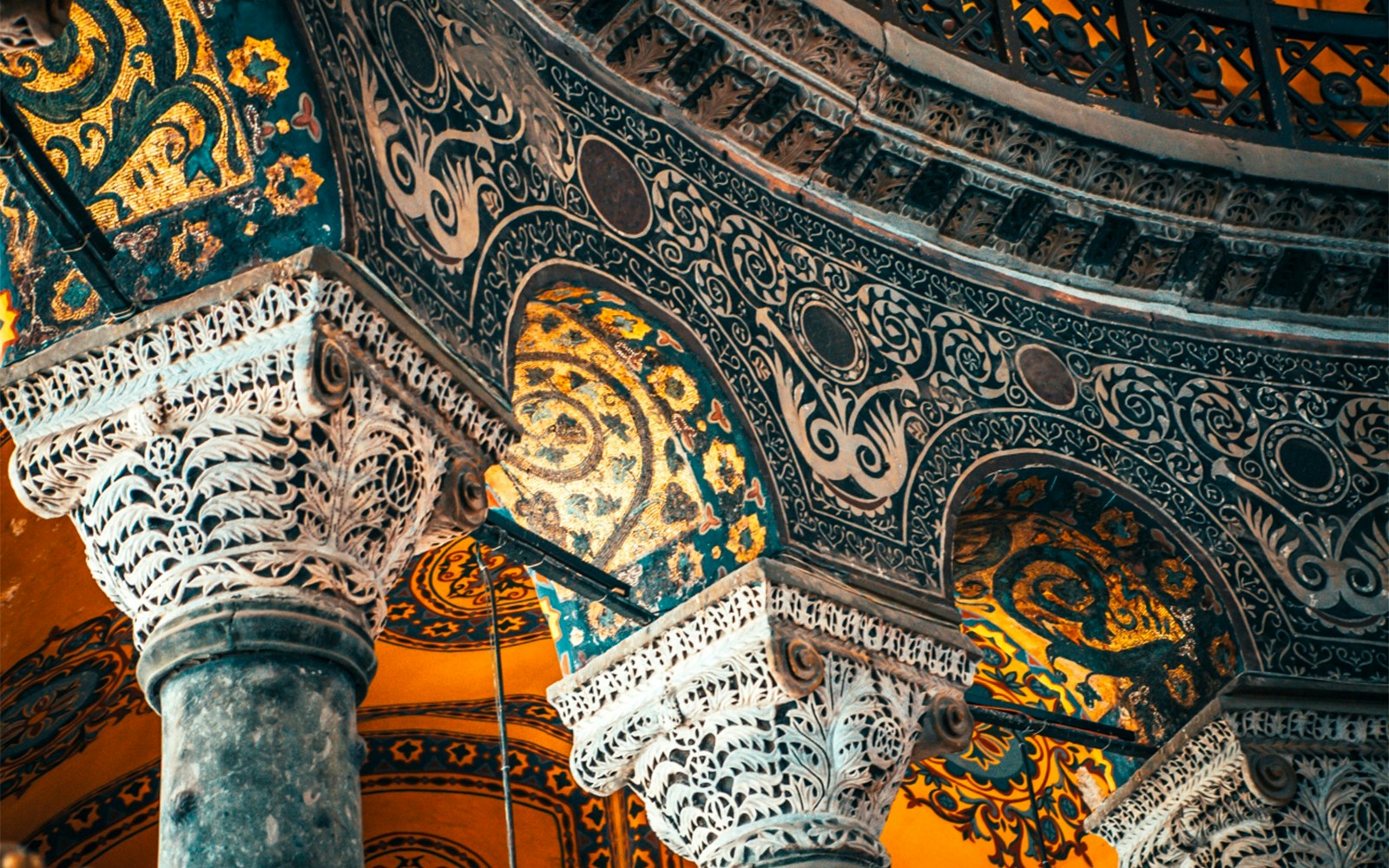
The interior of the Hagia Sophia is equally majestic, with its intricate mosaics and impressive decorations. Hagia Sophia's innovative design elements have stood the test of time and continue to captivate visitors to this day.

Inside Hagia Sophia

Hagia Sophia today

Interior view of Hagia Sophia with ornate domes and Arabic calligraphy, Istanbul.

Today, the Hagia Sophia continues to draw attention as the symbol of two dominant religions as well as an architectural marvel of the Byzantine era. From a religious perspective, the shifting power heads in Turkey and the Eastern-Western cultural exchanges have made Hagia Sophia to be a powerful reminder of the peaceful coexistence of different religions throughout history.

The Grand Central Dome, impressive interiors, and shimmering mosaics have established Hagia Sophia as an engineering marvel and have been declared a UNESCO World Heritage Site.

Plan your visit to Hagia Sophia

Hagia Sophia’s influence and legacy

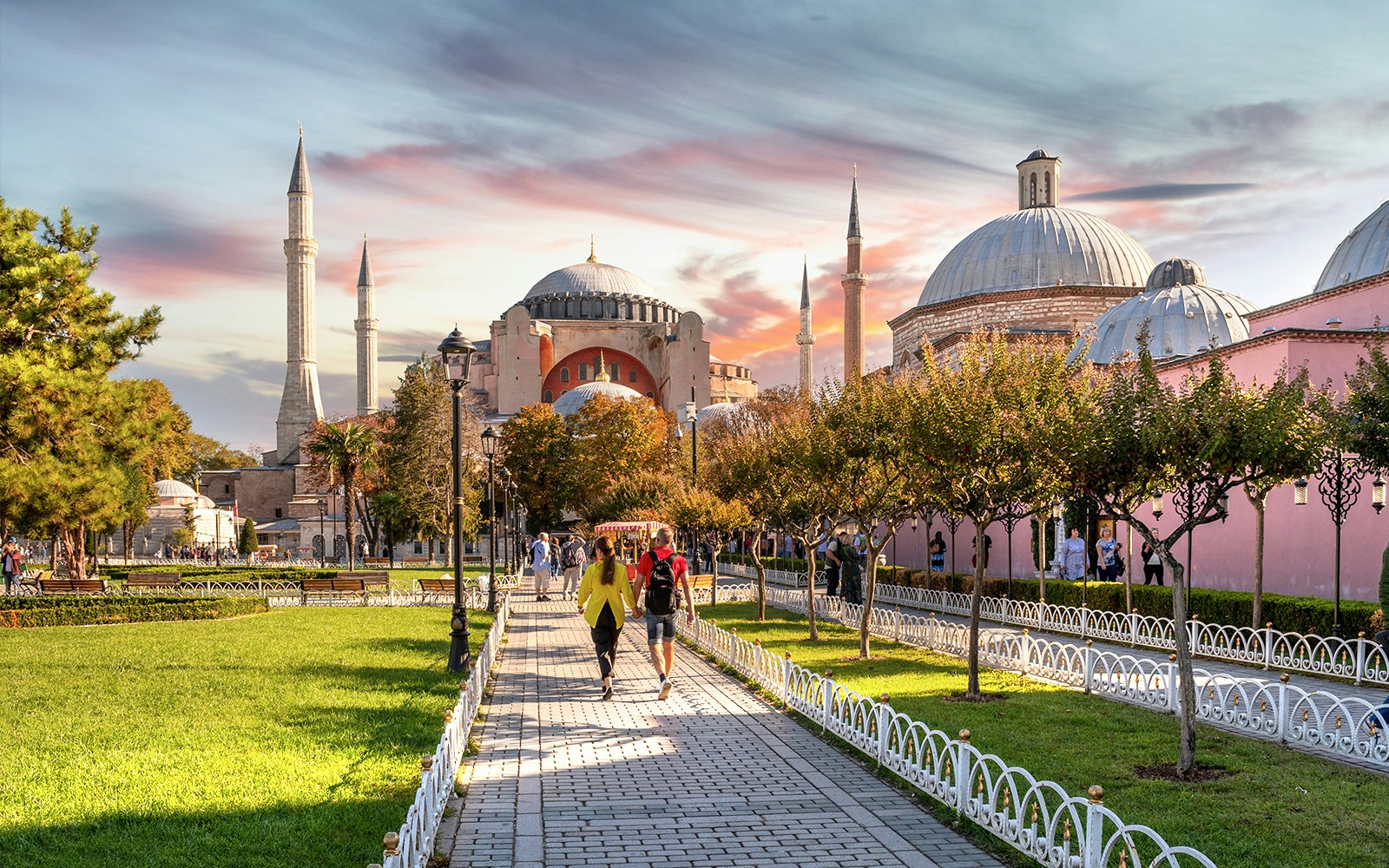
Hagia Sophia exterior with minarets and gardens, Istanbul.
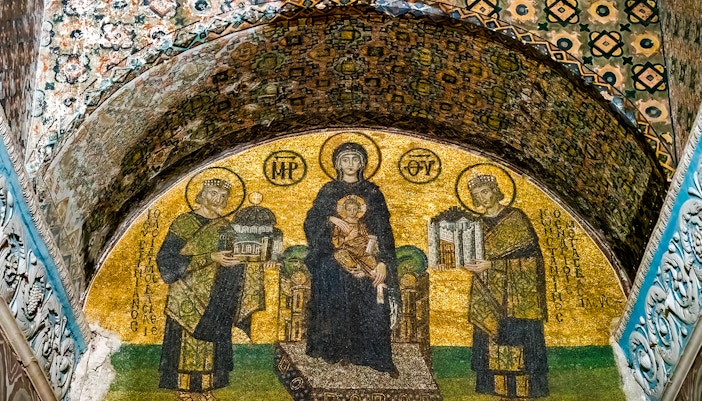
Mosaic of Virgin Mary and Child on Hagia Sophia dome, Istanbul.
Hagia Sophia interior with ornate columns and intricate mosaics, Istanbul, Turkey.
Hagia Sophia in Istanbul with minarets and domed roof surrounded by autumn trees.
Interior view of Hagia Sophia with visitors exploring the historic architecture in Istanbul.
Hagia Sophia exterior with visitors walking in the garden, Istanbul.
1/6

Architectural innovation

The 31-meter wide and 55-meter high dome creates an ethereal, floating space that influenced the design of mosques across the Islamic world.

Hagia Sophia's architecture

Cultural symbol

Its transformation from church to mosque to museum and back to mosque reflects Istanbul’s layered civilizations and historical shifts.

Living legacy

The coexistence of Byzantine mosaics and Ottoman additions highlights centuries of artistic expression and cultural blending.

Blueprint for future architecture

Hagia Sophia’s dome-and-pendentive system inspired countless churches and mosques in Byzantium and the Ottoman Empire.

Engineering resilience

Innovative structural techniques allowed Hagia Sophia to survive earthquakes and centuries of wear, inspiring generations of engineers.

Inspiration worldwide

Hagia Sophia’s scale, dome structure, and spatial design influenced architects beyond Istanbul, shaping religious and civic buildings across continents.

Frequently asked questions about Hagia Sophia's history

How old is Hagia Sophia?

The Hagia Sophia spans over 1500 years. It was established as an Eastern Orthodox Church during the Byzantine era.

Why is Hagia Sophia famous?

The Hagia Sophia attracts attention from all over the world due to its impressive Grand Central Dome and intricate mosaics. It is an enduring symbol of Turkey's changing powers and Eastern-Western cultural heritage.

Where is Hagia Sophia?

Hagia Sophia is situated in Sultanahmet Square, near the Blue Mosque. The address is Sultan Ahmet, Ayasofya Meydanı No:1, 34122 Fatih İstanbul, Turkey.

What is the architectural style of the Hagia Sophia?

Hagia Sophia's architecture dates to the Byzantine era. Given its past as an Orthodox Church to a Mosque to a Museum, and now a Mosque again, the structure retains its previous influences. The most distinct feature of Hagia Sophia is its Grand Dome, which rises to a height of above 180 feet.

How much does it cost to visit the Hagia Sophia?

Depending on the kind of Hagia Sophia ticket you choose, it can cost between €31 to €36. Depending on the ticket you choose, you can skip ahead of long lines and enjoy historian-guided tours with skip-the-line entry access. The combo tickets will help you save money, as they range from around €59 and cover many more attractions.

Are there guided tours explaining the history of the Hagia Sophia?

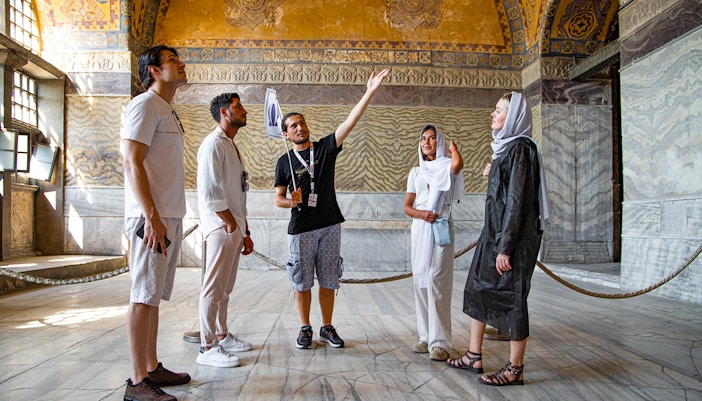
Yes, you can book Hagia Sophia guided tours, where an experienced tour guide will take you through the minarets, mosaics, and artifacts inside the Mosque. You can also skip ahead of long lines at the venue if you choose historian-guided tours with skip-the-line entry.

Is it worth visiting the Hagia Sophia?

Yes, there are many reasons why you should add Hagia Sophia to your bucket list. It is a perfect example of the beauty and grandeur of Byzantine architecture. The Hagia Sophia is also a symbol of the city of Istanbul and a reminder of the blending of Eastern and Western cultures.

More reads

Tour group with guide inside Hagia Sophia, Istanbul, discussing historical details.

Plan your visit to Hagia Sophia

Hagia Sophia's intricate interior dome and arches in Istanbul.

Hagia Sophia architecture

Christian mosaic of Virgin Mary and Child in Hagia Sophia, Istanbul.

Hagia Sophia Church