Target the 9am opening slot or post-5pm windows on weekdays. Natural light floods through the upper apse windows at these times, illuminating the gold leaf and marble framing without the intense midday crowds or prayer closures disrupting your view.
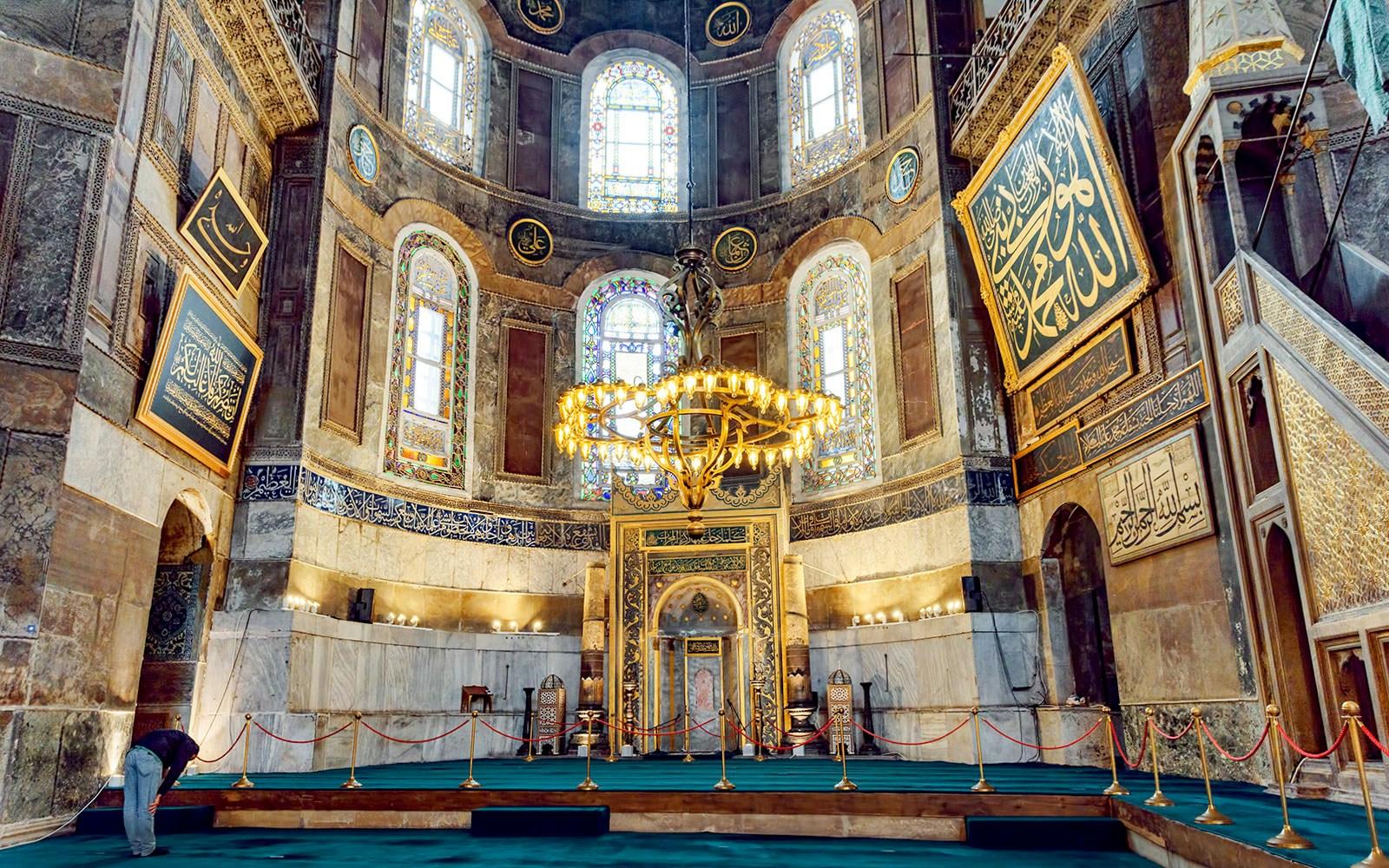
The Hagia Sophia mihrab is included with all Hagia Sophia Grand Mosque entry tickets; no separate ticket exists for this specific area. It is located directly ahead of you within the main nave's apse, serving as the central focal point of the ground-floor prayer hall. Book a skip-the-line ticket or a guided tour to easily navigate the visitor galleries and gain crucial context on how this Islamic structure was integrated into a Byzantine Christian basilica.
Target the 9am opening slot or post-5pm windows on weekdays. Natural light floods through the upper apse windows at these times, illuminating the gold leaf and marble framing without the intense midday crowds or prayer closures disrupting your view.
Allow 5 to 10 minutes if self-guided, or 15 minutes with a guide. This gives you enough time to examine the intricate Arabic calligraphy and notice how the structure shifts away from the building's original symmetry.
The mihrab is positioned in the central apse of the main nave. Pace your visit by exploring the outer narthex first, ensuring you enter the main hall with fresh eyes before focusing on the altar space.
Crowds peak heavily between 11am and 3pm, and the area closes to tourists during daily prayer times. Visiting during off-peak windows reduces ambient noise, letting you appreciate the spatial grandeur in relative quiet.
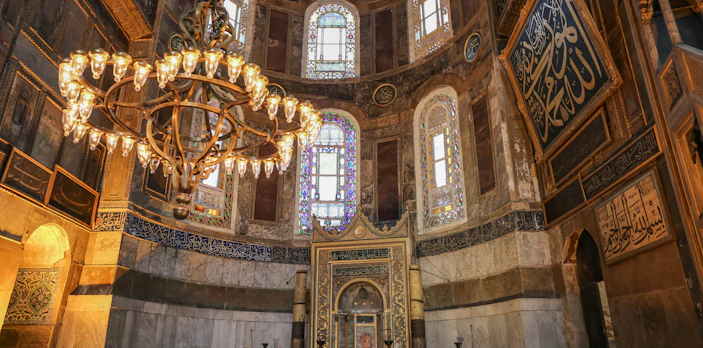
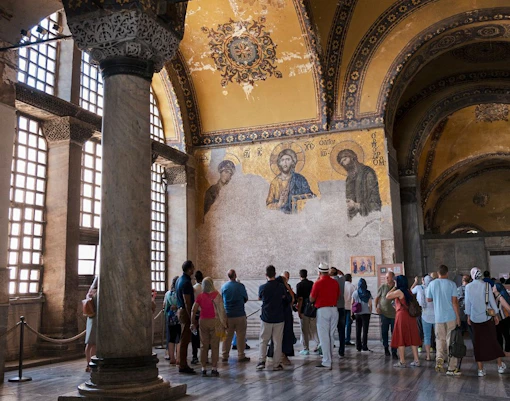
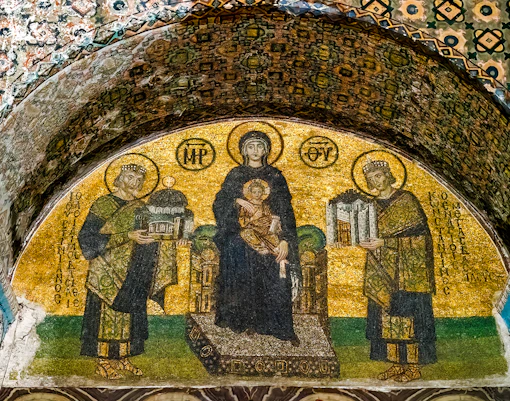
Focus on the gold-gilded niche itself, then look slightly upward to spot how it sits asymmetrical to the Byzantine Christian mosaic of the Virgin Mary above it. Stand back 20 paces to capture the full visual layering.
Most visitors assume the mihrab is perfectly aligned with the architecture. Look closely and you will see it is deliberately built slightly off-center to point precisely toward Mecca rather than due east.
| Ticket type | Why choose it |
|---|---|
Skip-the-line | Bypass the long main entrance queues and preserve your energy for exploring the interior. |
Guided tour | Understand the complex architectural and religious transition from a cathedral to a mosque. |
Combo pass | Combine your visit with nearby Byzantine sites to see how religious architecture evolved across Istanbul. |
Most visitors admire the grand scale of the Hagia Sophia without realizing that the mihrab sits at a deliberate, calculation-driven angle. Because the original 6th-century Christian basilica was oriented toward the east, the Ottoman builders had to construct the niche slightly offset to the right within the apse so that worshippers could face Mecca accurately. This subtle architectural adjustment serves as a permanent, physical record of the monument's layered religious identity.
Look closely at the interior curve of the niche to spot the radiant gold leaf and intricate geometric tile work. This ornamentation was designed to catch and reflect candlelight during evening services, drawing the eyes of worshippers directly to the front of the hall.
Flanking the niche are two massive, historical bronze candelabras. These were brought back from Hungary by Sultan Suleiman the Magnificent in the 16th century following his military campaigns, framing the prayer space with imperial trophies.
Examine the elegant Arabic scripts bordering the upper framework of the niche. These verses emphasize the sanctity of prayer and Mary's presence in the temple, creating a deliberate thematic bridge to the Christian artwork situated directly above.
Installed immediately after the conquest of Constantinople in 1453 under Sultan Mehmed II, the mihrab transformed the former Christian cathedral into the city's premier imperial mosque. Over the centuries, successive Ottoman sultans repaired, re-gilded, and embellished the structure—with major renovations occurring in the 19th century—to showcase their religious devotion. Today, it remains fully operational, serving as the central point where imams stand to lead daily Islamic prayers.
Yes. Access to the main hall where the mihrab is situated is included with every standard entry ticket. No separate ticket is required.
No. Your standard Hagia Sophia entry ticket grants you full access to the visitor pathways surrounding the central prayer space.
No. The mihrab is built directly into the interior apse wall of the main nave and can only be viewed from inside the monument.
You will see it as soon as you step through the Imperial Gate into the main nave. It acts as the central focal point of the hall.
Spend 5 to 10 minutes observing the architectural alignment, calligraphy, and flanking candelabras to fully appreciate its structural history.
Yes, but tourist movement on the ground floor is restricted to designated side aisles to avoid disrupting worshippers during active prayer sessions.
Flash photography is prohibited. Photography of any kind is discouraged during active prayer times out of respect for the worshippers.
It is offset to the right because the original church faced due east, whereas Islamic prayer requires alignment with Mecca, which lies southeast of Istanbul.